Find The Hand™
Notice where the hand goes and where it is exposed during the task.
 Discuss an application ↗
Workers make hooks because the task calls for reach. PSC REACH-IT™ turns that field insight into a configurable tool for push–pull guidance and positioning.
2–12 ft range · Fibreglass or aluminium · Not for lifting
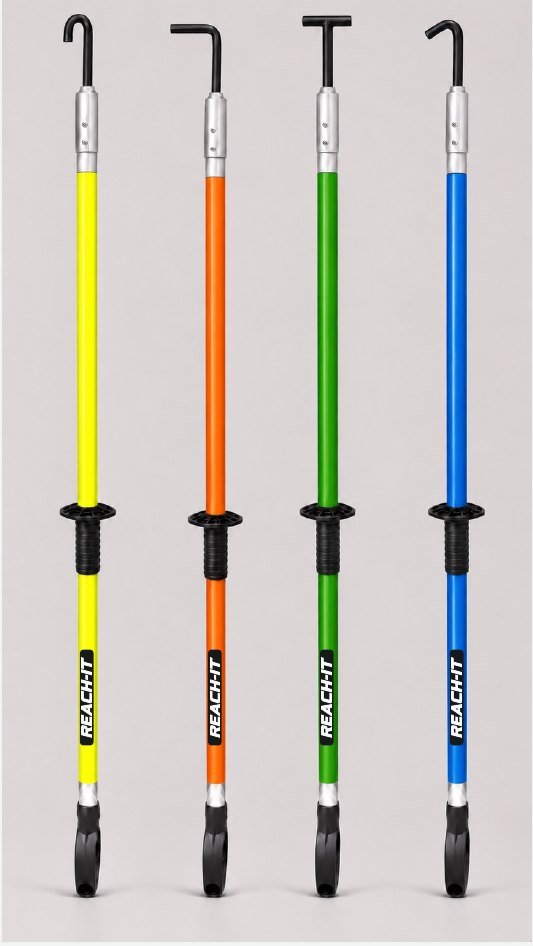

During PSC’s Find The Hand™ audits, we observed workers making hooks from rebar, pipe or wood to guide and position material from farther away. We see that improvisation as practical ingenuity—and as a signal that a suitable tool may be needed.
Before selecting REACH-IT™, look at how the improvised hook is being used. Is the hand pushing, pulling, guiding or positioning? Where does the hook contact the material? Which way could the material move? Those answers help identify the hook shape and reach for the application.
Straight rods, bent metal hooks and long narrow poles appear in very different tasks: clearing coke-oven debris, reaching into equipment, and guiding or positioning material. The forms vary because the hand functions vary. Each improvised tool is evidence of a worker trying to create separation with what is available.
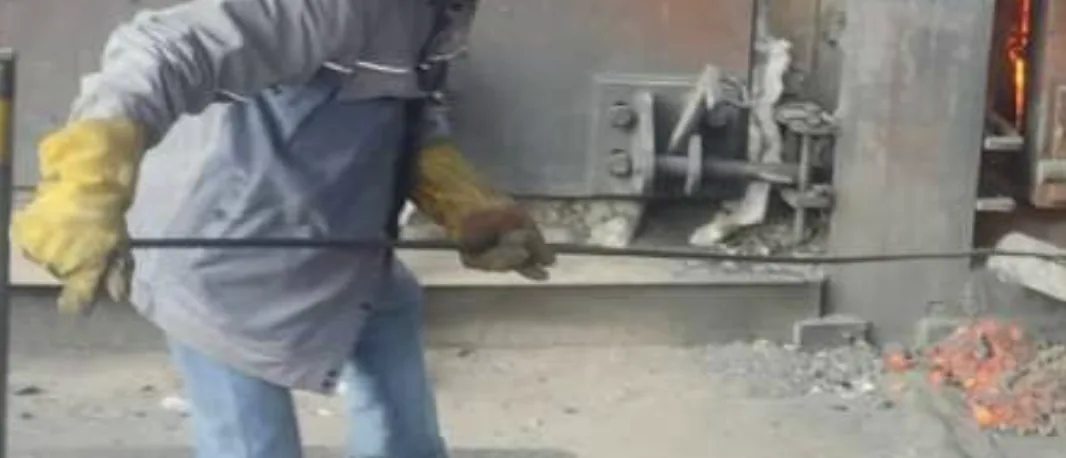

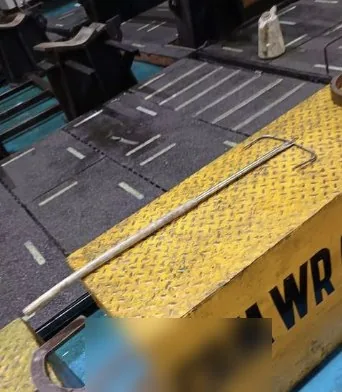
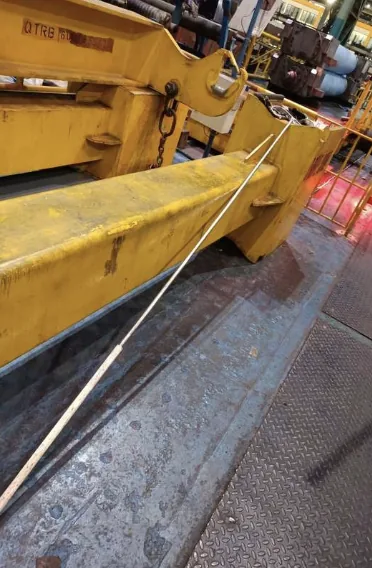
Field photographs illustrate different improvised forms observed in industrial tasks. They are shown to recognize worker ingenuity and explain the product need.
PSC looks at the task behind the tool: what the hand is doing, where contact occurs, how the material can move and what working space is available. The brief considers reach, engagement geometry and control, along with material, grip, foreseeable demand, failure behaviour, ergonomics, repeatability and inspection. That field-led process shaped REACH-IT™ as a configurable range of shaft lengths, materials and hook/head options selected for the application.
Notice where the hand goes and where it is exposed during the task.
Determine whether the hand must push, pull, guide or position material.
Choose a suitable working position, reach and hook geometry for the task.
Use this selector to explore the available shaft and head combinations. Final selection should follow an application review and site procedures.
Select a hook shape based on the contact point and the direction the material may move. J, T, L, S and C shapes are available with SH or SS heads.
Example: PSC-RIT-SH-FG-6-JThis code shows the selected options; it does not confirm suitability. Choose hook shape, length and working position after reviewing the actual task.
The selector is a discussion aid, not an engineering approval. LW aluminium heads are available in S-hook or Serrated configurations only. Shaft colour is assigned by PSC Hand Safety.
Head geometry can be customised to suit the task, including C, F, Sling, Scrapper and Wedge heads, as well as other designs. Share the hand function, contact point or a task photo with PSC Hand Safety to discuss a suitable configuration.
Fibreglass from 2–8 ft; lightweight aluminium from 2–12 ft. High-visibility colours.
SH hardened steel, SS stainless steel, or LW aluminium. Sleeve-mounted metal head.
J, T, L, S and C examples, with task-specific options such as F, Sling, Scrapper and Wedge heads.
D-handle and rubber buffers: one up to 5 ft; two from 6 ft and above.
Read the field story, review the product configuration and access item codes and prices.
The field observations and product-development story behind REACH-IT™.
Download product profile ↗Review shaft options, hook heads, lengths, intended use and configuration details.
Download datasheet ↗Browse base codes, hook-shape suffixes and listed prices. GST, freight and validity are to be confirmed in the quotation.
Download item codes & prices ↗Show us what the worker is pushing, pulling, guiding or positioning. Include the contact point and available working space. PSC Hand Safety will review the application and recommend a suitable engineered option.
Tell us about your task, the hand function and the reach you need. Our team will review your requirement and help identify a suitable REACH-IT™ configuration.